What are the measures taken in the Spring Budget ? 

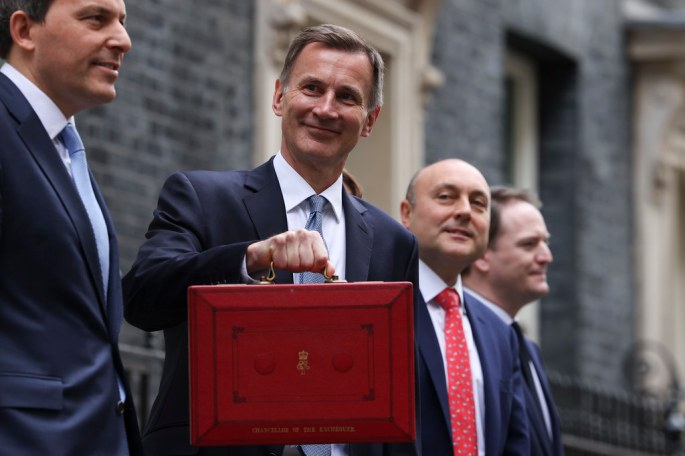
Yesterday, the Chancellor, Jeremy Hunt, delivered his Spring Budget. He talked about the different measures taken by the government, involving property tax, holiday lets as well as non-dom tax status. 

General State of the Economy 

Jeremy Hunt started delivering his budget talking about the state of the British economy, dealing with the financial crisis, the pandemic and the energy crisis. He expects the economy to grow by 0.8% this year and 1.9% in 2025. Inflation is expected to fall below the government’s 2% target in just a few months time according to Hunt, down from 4% in January.

Non-Dom Tax Status

During his budget, the chancellor confirmed the government will abolish the non-dom tax status and it will be replaced by a “modern, simpler and fairer” system from April 2025. The status is used by people who are resident in the UK, but who have certain overseas links and are not domiciled in the UK for tax purposes as they only pay UK tax on money made in the country, but not on any world wide income.

Property tax and Holiday Lets

Jeremy Hunt said the government will reduce the high rate of property capital gains tax from 28% to 24%.He also announced the abolition of stamp duty relief for those buying more than one dwelling. During his budget, the Chancellor confirmed that he plans to scrap the furnished holiday lets regime in April 2025. He said the Furnished Holiday Lettings regime was causing a ‘distortion’ in the housing market and depriving local people of affordable homes.


How Does It Work When You Are A Non-Resident Landlord ?

When you own a property in the United Kingdom but live abroad, it can be complicated to know what the tax differences are when just being a simple resident landlord and what to do to make the right steps and still stay compliant. 

What makes being a non-resident different ? 

When you own a property in the UK but live abroad, then the tax regulations will be different for you to be compliant and pay your taxes on the properties you own in the UK. The NRLS (Non-Resident Landlord Scheme) is a scheme that helps to tax your UK rental income while living abroad. However, if you are not registered with this scheme and you rent out your property through an agency then the tax will be deducted directly before you declare your income. 

You need to be aware and look at the double taxation agreement between the UK and the country you live in. You will always have to pay tax in the UK, but you need to see how it works in the agreement with your country of residence. Also, non-resident landlords will usually be required to file a Self Assessment tax return, even if you don’t have any tax to pay. Earning rental income from the UK means you have to follow the normal UK tax year from which is from the 6th of April to the 5th of April of the next year. 

You may be entitled to a UK Tax Free Personal allowance of £12 570 which is the amount of income that you will not have to pay tax on. In terms of Real Time Capital Gains, when you are a non-resident, you will have to report the sale of any property, with or without tax being due on the sale. 

We can help you register for the Non-Resident Landlord Scheme as well as helping you with your Self Assessment, so get in touch straight away! 

What is Real Time Capital Gains Declaration ?

Capital Gains Tax declaration is when you report your gains from the sale of a property via the Real-time CGT reporting system or a Self assessment Tax Return, depending on your situation. When individuals do sale a property, they might forget they have to report their gains but the error can be costly with the possibility of facing penalties. 

When do You have to do this declaration ?

Capital Gains Tax declaration applies for self assessment, individuals, trustees, partnership, limited liability partnerships and joint owners of property. If you are a UK resident, then you will 60 days from the date of completion to report your gains. Although, as a resident, you will not need to do this declaration if you don’t have any tax to pay and you can wait to include the sale in your Self Assessment. 

However, if you are a non-resident, then you will have to report the sale of the property, whether or not you will have any tax due on the sale. In any circumstance, you will have 60 days from the date of completion to report your sale to avoid any unwanted penalties. 

What are the penalties ? 

Depending on how late you are in the deadlines to report your gains and to pay your tax due, the penalties will go up. It starts off with a fixed penalty of £100 per return for missing the deadline and then it will be followed with a daily penalty of £10 for the next 90 days. If you are 6 months late, it will be 5% of tax due or £300 penalty, depending on what is greater. From 12 months of being late to file the declaration, the penalty is dependent on behaviour and deliberately withholding information from HMRC. 

If it is deliberate and concealed withholding information, then the penalty will be 100% of tax due or £300 if greater. But if it is not concealed, then it will be 70% of tax due or £300 if greater. For being late for payment of tax due, then the penalties will be 5% of tax due for 30 days, 5% of tax outstanding for 6 months and 5% of tax outstanding for 12 months.

If you need any help with reporting Real Time Capital Gains, then you can contact us right away.

What to know about the Self Assessment Tax Returns?

Self Assessment is a system HMRC uses to collect Income Tax. Tax is usually deducted automatically from wages, pensions and savings. However, people and businesses with other income, including landlords receiving rental income, must report it in a tax return depending on the situation.

In what case does this apply to you ?

You must send a tax return if in the last tax year you were self-employed as a sole trader and earned more than £1,000 (before taking off anything you can claim tax relief on) or if you are a partner and part of a business partnership for example. Other situations could also mean you need to assess yourself, such as being a company director receiving dividends or living in the UK and earning income from overseas for example.

You may need to send a return if you have any other earnings from tips and commission, income from savings, investments and dividends or foreign income.

What are the deadlines and penalties ?

Online returns must be submitted by the 31st of January but the payment of the tax you owe must also be paid by that date. Individuals use self assessment tax returns to provide HMRC with the information needed to calculate any tax they owe, and to do that they will have to provide certain documents and information to their accountant or tax adviser.  

If you do not make the payment in time then you will have penalties. The longer you don’t pay the tax you owe, the bigger the penalties get. You will be charged a £100 penalty if you fail to submit your return by the 31 January deadline, even if you have no tax to pay. Further penalties of £10 a day are applied after three months, up to a maximum of £900. After six months, you’ll get a further penalty of 5% of the tax owed or £300 (whichever is greater), which is repeated at 12 months.

If you need help with your Self Assessment Tax Returns or if you are not sure whether this applies to you then please contact us so that we can help you.

Airbnb Landlords : HMRC Cracking Down To Stop Tax Evasion 

In the last few years, the popularity of platforms such as Airbnb has grown exponentially with users having the opportunity to let out their properties for a short or medium term. However, in a strategy to halt landlords not paying taxes, HMRC are using data transmitted by Airbnb to find people using the platform who may not have declared their rental income. 

HMRC using AirBnB data 

Since 2020, Airbnb have been compelled to share data with HMRC and provide information such as earnings from the hosts on the platform. Information can go back to the 2017/2018 financial year in the UK. In 2023, it is believed the tax office has sent out over 800 letters to potential hosts who may have paid insufficient tax. 

Following previous inquiries into the situation, Treasury estimates 50% of owners were unaware of their obligation to pay taxes on the rental income they receive via the use of these type of platforms. Furthermore, HMRC is also targeting hosts and property owners on various online rental platforms such as Booking.com, HomeAway and TripAdvisor.

Consequences and Penalties 

HMRC are also targeting landlords who receive income from their properties in foreign countries. For example, since January 2020, every digital platform that operates in France has been required to report information including income earned and the number of transactions to the national tax authorities.

If you fail to report your income from Airbnb, then you may face penalties depending on your behaviour and whether or not you deliberately concealed information to avoid paying tax on your rental income. Depending on your situation, the penalty can go vary from nothing to 100% of the tax due you failed to declare. 

We can help you clarify your situation and avoid any nasty surprises, contact us straight away.